Why Garden Paths Change the Way a Space Unfolds
See how garden paths guide attention through straight runs, bends, and framed views, so you can read an existing layout and understand what each route reveals.
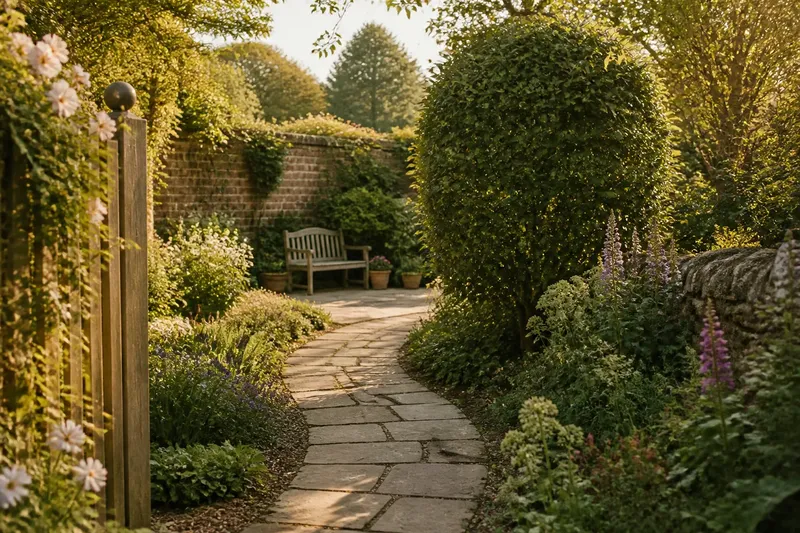
At the gate, a straight garden path may put a bench, a flowering shrub, and the far fence in view at once. A bending garden path can hide that same bench until you walk farther in. To understand how paths shape a garden, notice what each route reveals, delays, or places beside you—not just where it leads.
Read the route before judging its shape
Walk the garden at an ordinary pace, following the path as it is used. Look ahead, then notice the edges: a low planting, a tree trunk, a change in paving, or a gap between shrubs can all direct the eye. A route is not only a line on a plan. It is a sequence of views encountered from particular positions.
Pause where the path changes direction and where it meets a doorway, gate, or open area. Ask what catches your eye first, what remains partly hidden, and whether the path gives you a reason to slow down. These observations help distinguish a deliberate reveal from an accidental obstruction without assuming the garden needs alteration.
For a useful record, sketch the route with a pencil and mark a few stopping points. Add arrows for the views that feel strongest, and note where branches or structures block the outlook. A rough drawing is enough; the purpose is to capture the experience, not make a construction plan.
A straight path suits a garden meant to read at a glance
A straight run creates a clear visual axis. It can draw attention to a doorway, a sculpture, a tree, or another destination at the far end. The eye tends to travel along the route, so features beside it may register as a supporting frame rather than separate discoveries.
This approach suits a compact or formal layout where easy orientation matters. It can also help a visitor understand the connection between two entrances without searching for the way through. The trade-off is that a long, unobstructed view may expose the whole garden immediately, leaving little to discover farther along.
Read the axis from both ends. A feature that seems to anchor the view from the entrance may disappear when approached, while a side planting may become more prominent on the return. The changing view can tell you whether the path serves a destination, marks a boundary, or simply divides the space.
A gentle bend suits a garden that reveals itself in stages
A curving route can keep part of the garden out of sight and shift attention toward nearby details. A bend around a hedge, raised bed, or tree may make the next section feel distinct without creating a hard boundary. It can also make a short route feel less like a direct crossing, though the effect depends on what the curve actually hides and shows.
This option suits a garden where gradual discovery is part of the experience, or where visitors benefit from a softer transition between areas. The bend should still read as a route rather than an unexplained detour. Follow it and notice whether the next view gives you a destination, a useful pause, or simply more of the same scene.
Imagine a visitor entering a narrow garden where the path bends behind a tall shrub. From the gate, they see open paving but not the seat beyond it; as they round the shrub, the seat appears beside a small planting. That sequence may make the route feel purposeful. If the bend instead reveals a dead end or a blank wall, the layout gives a different impression.
Compare the main path approaches?
What does a straight garden path make visible?
It often presents a destination and the space beyond it in one view. Check whether that clarity suits the garden or makes its side features easy to overlook.
What does a curved garden path conceal?
A curve can screen a destination or shift the view toward planting close to the route. Look at the sightline from the approach and again after the bend, since the concealed feature may explain the turn.
How can I tell if a path bend feels intentional?
Notice what changes at the turn: the view, your sense of direction, or the relationship between nearby spaces. If nothing changes and the route has no visible destination, record that impression before deciding what it means for the layout.
Use sightlines to choose what deserves attention
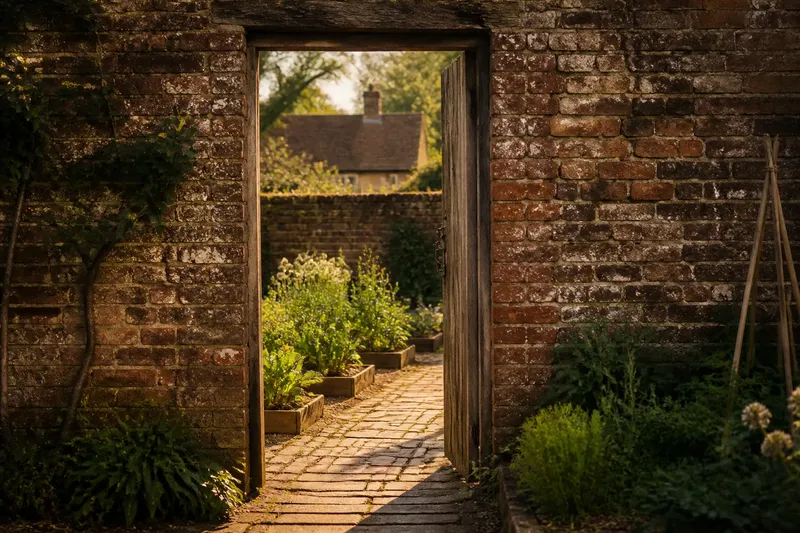
A sightline is the view available from a particular spot, such as the garden entrance, a patio edge, or a turn in the path. Trace it at the height a standing or seated visitor would see. A doorway may frame a tree; a gap between plants may point toward a shed; a wall may cut off a view that opens farther along.
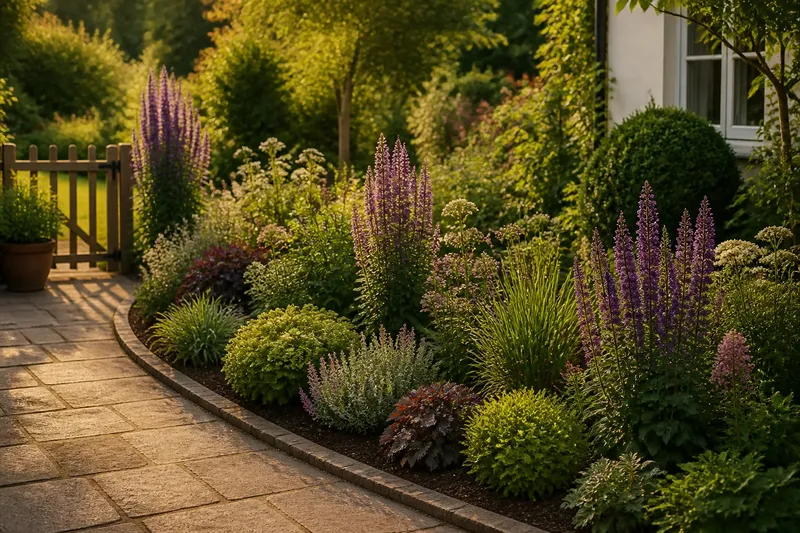
Notice how the path and its surroundings work together. A straight route beside a high hedge may feel enclosed, while the same line beside an open lawn can feel exposed. A bend beside a low border may keep the wider garden visible, so curvature alone does not determine whether a route feels private or open.
Light and seasonal growth can change what a sightline contains. A deciduous canopy may screen a view in leaf but open it when bare, and tall flowers may cover a low feature during part of the growing season. Record what is visible at the time you walk; a second look in another season can clarify whether the path’s effect is stable or temporary.
Choose an approach by the experience it supports
Compare paths by asking what kind of attention they invite. A straight route favors orientation and a clear destination. A gentle bend favors gradual discovery. Some gardens combine both: a direct entrance may lead to a turning path, giving visitors an immediate sense of direction and a later change of view.
- If the main feature is visible from the entrance, choose the straight route as the better fit; if it is not, compare the view from a turn before deciding that a direct axis would help.
- If visitors need to understand the connection between spaces, favor the route whose destination is easiest to see; if neither is clear, mark the confusing junction on your sketch.
- If the path is used in both directions, walk it from each end; if the return view loses its focal point, note which side feature then draws attention.
- If people are likely to pause near a seat, gate, or paving change, inspect the view from that point; if it feels blocked, record the obstruction rather than assuming the route itself is wrong.
- If seasonal growth could conceal a turn or junction, look again when foliage changes; if the route then becomes hard to read, note which plant or branch affects the sightline.
- If a bend reveals a destination or a useful transition, treat that as evidence of a purposeful sequence; if it reveals only a dead end or blank wall, record that competing effect.
Say you are reading an existing garden with a gate at one end, a seat behind a tall shrub, and a side entrance at the other. First, sketch the straight path line and mark the gate, seat, shrub, and side entrance; the sketch shows that a direct view would connect both entrances but expose the seat from the gate. Next, walk the current bend and mark where the shrub blocks the seat, then where the seat appears; the result is a delayed reveal, but the side entrance is less obvious. Finally, compare the priorities: if easy movement between entrances matters most, the straight line reads more clearly; if the seat should appear as a destination during the walk, the bend gives the stronger sequence. These are invented observations for interpreting the layout, not a claim that either path needs to be built.
These are ways to interpret an existing layout, not instructions to replace a route. A path can serve practical movement and visual interest at the same time, and its purpose may become clear only when you consider the garden from several positions.
Let the next view clarify the route
When a route seems confusing, follow it to the next place where the view opens. That point often explains the path more clearly than its shape on a sketch: it may reveal a destination, connect two spaces, or bring a feature into view at close range. If the explanation remains unclear, note where you lost your sense of direction and what blocked the outlook.
Garden paths change how a space unfolds by controlling what a visitor can see from one moment to the next. Read the route from its entrance, turns, and stopping places, then compare the views in another season if foliage changes the scene. The useful question is what the path asks you to notice as you walk.